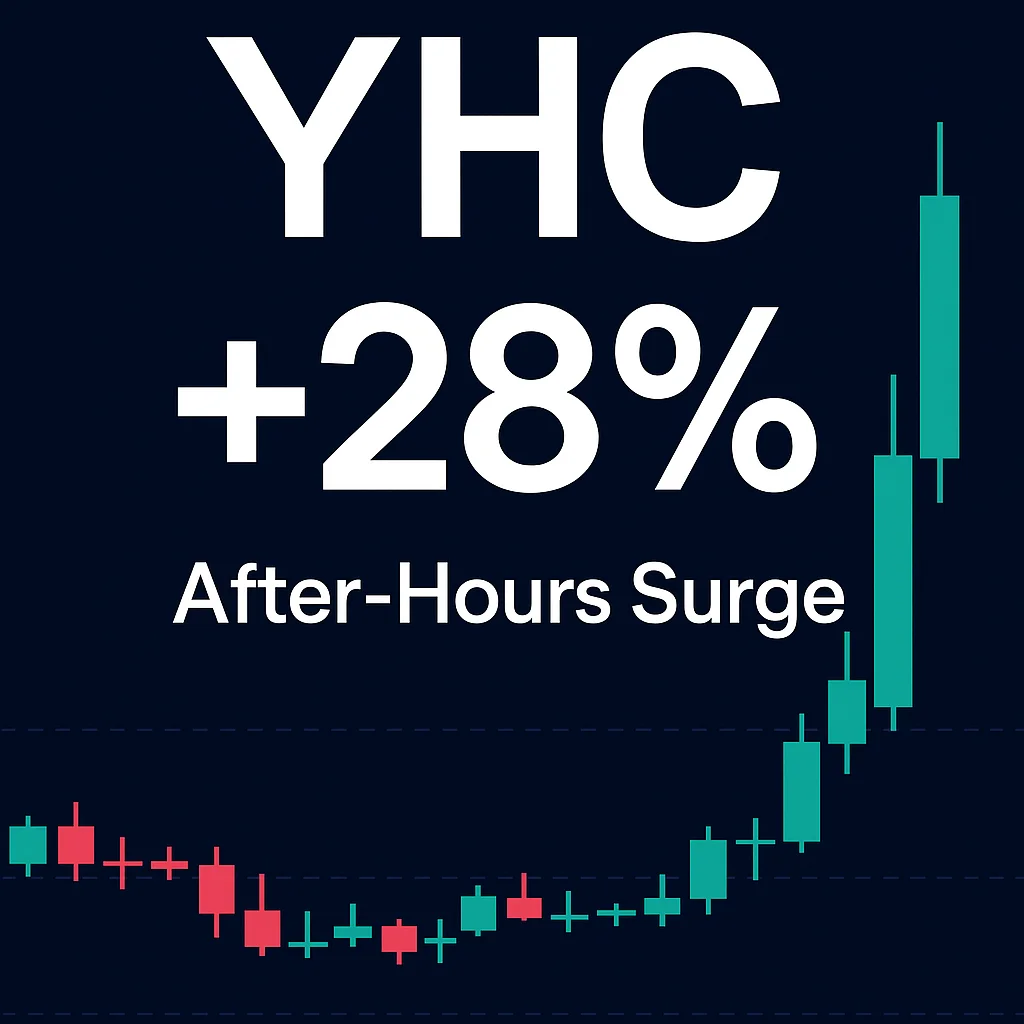
On May 10, 2025, LQR House Inc. (NASDAQ: YHC) surged 28.14% in after-hours trading, pushing its share price to $2.55. While this caught the attention of short-term traders and day trading communities, the underlying fundamentals—and lack thereof—make this spike worth dissecting. The company’s microcap status, with a market cap of just $2.07 million, amplifies both the potential for short-term gains and the risk of long-term capital destruction. In this post, we’ll take a closer look at what might have fueled the move, what dangers lie beneath, and why this isn’t just another ticker that got lucky.
No New Catalyst, No New Filing: The Silence is Loud
Perhaps the most telling part of YHC’s surge is what’s missing—news. There was no 8-K, no 6-K, no press release, and certainly no earnings report on May 10. The company has not issued any formal material update for weeks. And yet, in a matter of hours, the stock jumped nearly 30%. This sort of movement in the absence of corporate communication is not new in the world of microcaps, but it always warrants skepticism.
Some traders may see this as a positive—”no news is good news”—but that perspective ignores the underlying fragility of such moves. When a stock moves this sharply on sentiment alone, without a fundamental driver, it typically means one thing
short-lived momentum, not lasting value.
LQR House’s Business Model: Branding Without the Balance Sheet
LQR House pitches itself as a digital marketing agency tailored for the alcoholic beverage space. Its key asset is the “SipSocial” platform, which is supposed to connect premium wine and spirits brands with consumers through influencer marketing and ecommerce tools. It sounds trendy on paper—DTC disruption in a tightly regulated industry—but YHC has yet to show any tangible scale.
Its last earnings report revealed negligible revenues, high net losses, and a consistently negative cash flow. Worse, many of its reported business “partnerships” are not revenue-generating joint ventures but merely promotional relationships. From an investor’s perspective, this means the company is more idea than execution.
Financial Position: A Business Running on Vapors
Let’s get into numbers. YHC’s last quarterly filing revealed
- Cash and cash equivalents under $500,000
- Quarterly net loss exceeding $1 million
- Minimal revenues (well under $100k)
In short, this is a company teetering on the edge of operational viability. Without a new capital injection or significant revenue turnaround, dilution is not just possible—it’s inevitable. Traders riding the momentum may be ignoring the fiscal cliff just ahead.
Float Mechanics: The Real Engine Behind the Spike
What really drove this move? Float. According to data from Fintel and Yahoo Finance, YHC has a float under 1.5 million shares. That is incredibly thin for a Nasdaq-listed company. When demand—even a relatively small surge of retail attention—hits such a stock, price action becomes explosive.
But float cuts both ways. The same lack of supply that drove shares up in after-hours can easily accelerate losses once buying stalls. Volume evaporates, bids disappear, and slippage increases. This is the textbook profile of a low-float trap—one where retail excitement temporarily overrides rational risk analysis.
Dilution Is Waiting in the Wings
YHC’s 2023 S-1 filing registered millions of shares and warrants for resale. While not all of those have been exercised or converted yet, the structure remains in place. The company could easily re-file a 424B3 or even launch a new ATM facility within days.
And why wouldn’t they? After-hours volume suggests speculative interest. What better time to file an offering than when the stock is up 30% with no fundamental reason? Management would be foolish not to take advantage of the price.
Reverse Split: A Familiar Playbook
In late 2023, YHC underwent a reverse split to maintain Nasdaq compliance. This maneuver temporarily raised the stock price above $1, but history has shown that these splits often precede aggressive dilution. If the company goes down that road again, current investors could find themselves holding a sharply diluted bag.
Insider Ownership and Lock-Ups
Most of YHC’s shares are likely held by insiders or PIPE participants under lock-up. Many of these could be governed by Rule 144, which requires either time-based or volume-based restrictions before public resale. That means despite having tens of millions of shares authorized, only a sliver is actually tradable, which explains the volatility—but also raises dilution risks once those restrictions expire.
Retail Speculation, Not Institutional Validation
It’s telling that YHC has no institutional analyst coverage. The recent buzz appears to be entirely retail-driven, with spikes in mentions on Reddit’s r/pennystocks and StockTwits. For short-term traders, this is familiar territory. But for long-term investors, the lack of due diligence or smart money presence is a major red flag.
Momentum trading isn’t inherently bad—but it requires exit discipline. And when the entire move is propped up by message board hype with no corresponding news? That’s a house of cards.
Stock Otaku’s Take
This isn’t the first time we’ve seen this, and it won’t be the last. YHC fits the classic mold of a microcap with a compelling narrative, minimal operations, and just enough float scarcity to cause chaos. The 28% after-hours spike is a perfect example of what happens when low supply meets hot speculation.
But let’s be clear
this is not a story of a turnaround or a fundamental breakout. It’s a liquidity-driven event, divorced from any revenue growth, product success, or strategic transformation.
Unless the company follows up with a credible filing—such as a partnership deal, meaningful revenue, or a restructuring announcement—this move is likely to unwind just as fast as it occurred.
That said, short-term traders looking for volatility will probably keep this on their watchlist for a few more sessions. But long-term investors? You’d be wise to stay cautious, because from where I sit, the only thing rising faster than YHC’s share price is the risk.
Disclaimer
This post is for informational purposes only and does not constitute investment advice. Always conduct your own due diligence and consult with a financial advisor before making investment decisions.